
No Pike County Blotter
Pike County has no full arrest log that the sheriff publishes for public review. No 72-hour list, no weekly roundup, nothing like it. The office runs a current-inmate portal. That view only shows who is in custody right now. Once a person posts bond or gets transferred, the entry fades away. The portal also lacks a visible booking date. For dated material, one official stop stands out. The sheriff's News Releases archive posts safety notices and selected incidents. It is not a running Pike County arrest log.
So how do you cover several days of Pike County arrests? Stack the pieces. Pair the current-inmate view with a dated regional roster. Add the right court and a records request when needed. Tag every result with its source and date so nothing blurs together. And remember the limits of a live roster. An absent name means one thing only. The person is not in custody at that moment. It does not prove they were never arrested in Pike County.
Read Pike Arrest History
For older events, trace a Pike County arrest backward from custody. Work through each system's own scope, since a copied entry can look current when it is not.
- Search the official Pike roster for current county custody.
- Open the Southeastern Ohio Regional Jail information page and follow its JDS link only when that regional path is relevant.
- Filter the regional information by name, book date, and arresting agency. A Pike-related row can sit within a multi-county list.
- Check the Pike County Court record search and Common Pleas docket for later filings and disposition.
- Ask Pike Records extension 3 for a dated booking, release, or transfer record when online windows do not answer the question.
Need something older? The 24 Hour Arrests page tracks fresh events. This arrest log works better for deeper searches. Use it for transfers, multi-day spans, and Pike County bookings that have dropped off a live roster.
Regional Pike Arrest Fields
Pike's own portal shows less detail. The JDS regional roster adds agency data and richer timestamps. That helps with transfer research across counties. Just know it stays a live regional view, not a Pike County arrest archive.
| Field | How to read it |
|---|---|
| Jail ID and SID | Identifiers used by the regional system. |
| Book date | The receiving roster's date, useful for ordering entries. |
| Arresting agency | The named agency, which may differ from the current custodian. |
| Charges | Charges shown at that stage, not convictions. |
| Court and next date | Routes for later case verification. |
| Disposition and bail | Status fields that can change as the case proceeds. |
| Photo | A regional interface field; it does not justify copying images into a gallery. |
The JDS Southeastern Ohio Regional Jail roster page posts its own run timestamp and a full regional field set for Pike bookings.
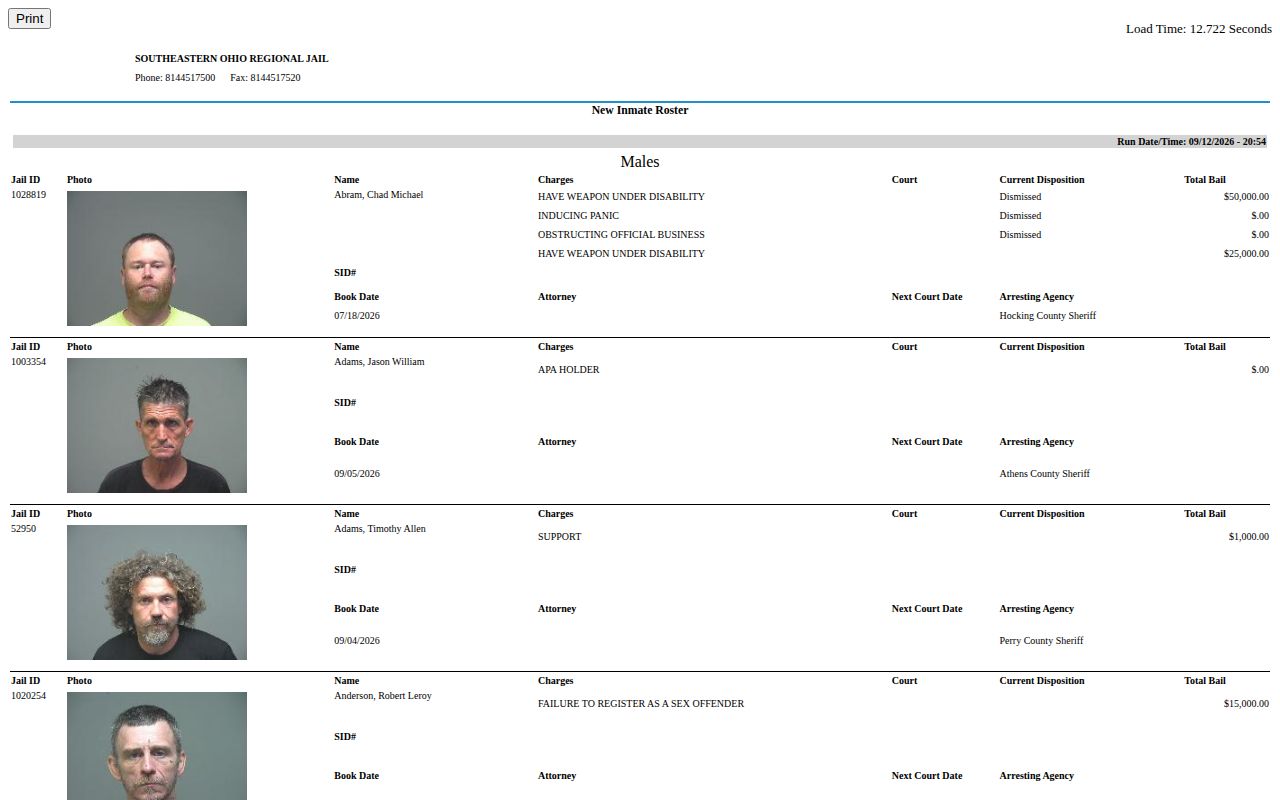
That timestamp simply dates the roster snapshot. It sets no fixed Pike publishing schedule.
Pike Transfers Change the Log
A Pike result and a JDS result can disagree. Neither one is wrong. Someone on the Pike arrest log but missing from JDS is no puzzle. They may still sit in the six-hour county hold. A person on JDS but missing from Pike may have transferred. Someone absent from both could be released, moved again, or dropped from the roster.
Regional fields add transfer context Pike's public view skips. Book date and arresting agency separate the initial arrest from later custody. Southeastern Ohio Regional Jail serves far more than Pike County. But Pike contracts with several jails rather than one. To confirm the receiving facility, call Corrections at 740-947-2111, extension 2.
- Arresting agency
- The office that made or recorded the arrest.
- Custodian
- The jail holding the person now.
- Disposition
- A recorded outcome or status, which must be read in context.
- Archive
- A retained historical set, not the same as a current roster.
Weekend Arrest Record Gaps
Pike publishes no weekend surge data. No holiday schedule exists either. The safer point is narrow. An arrest late on a weekend or holiday can cross several system clocks. The county hold may lapse before a court filing appears, and the court itself warns filings can lag at least 24 hours or longer. Whenever a source shows its own run time, read it. Guessing an update cadence only misleads. If an arrest spans a nonbusiness day, line up the incident time, the Pike intake record, the receiving jail's book date, and the court filing date. Those dates can differ for legitimate reasons.
Pike News Is Selective
Newspapers pick which arrests they cover. They also pick which ones they skip. That makes them a poor stand-in for a Pike County booking ledger. The Scioto Valley Guardian Pike County archive offers local color on a case. Its story choices and dates follow newsroom judgment rather than jail intake. Treat a story as background only. Then check the official jail or court record before drawing any conclusion about who was arrested.
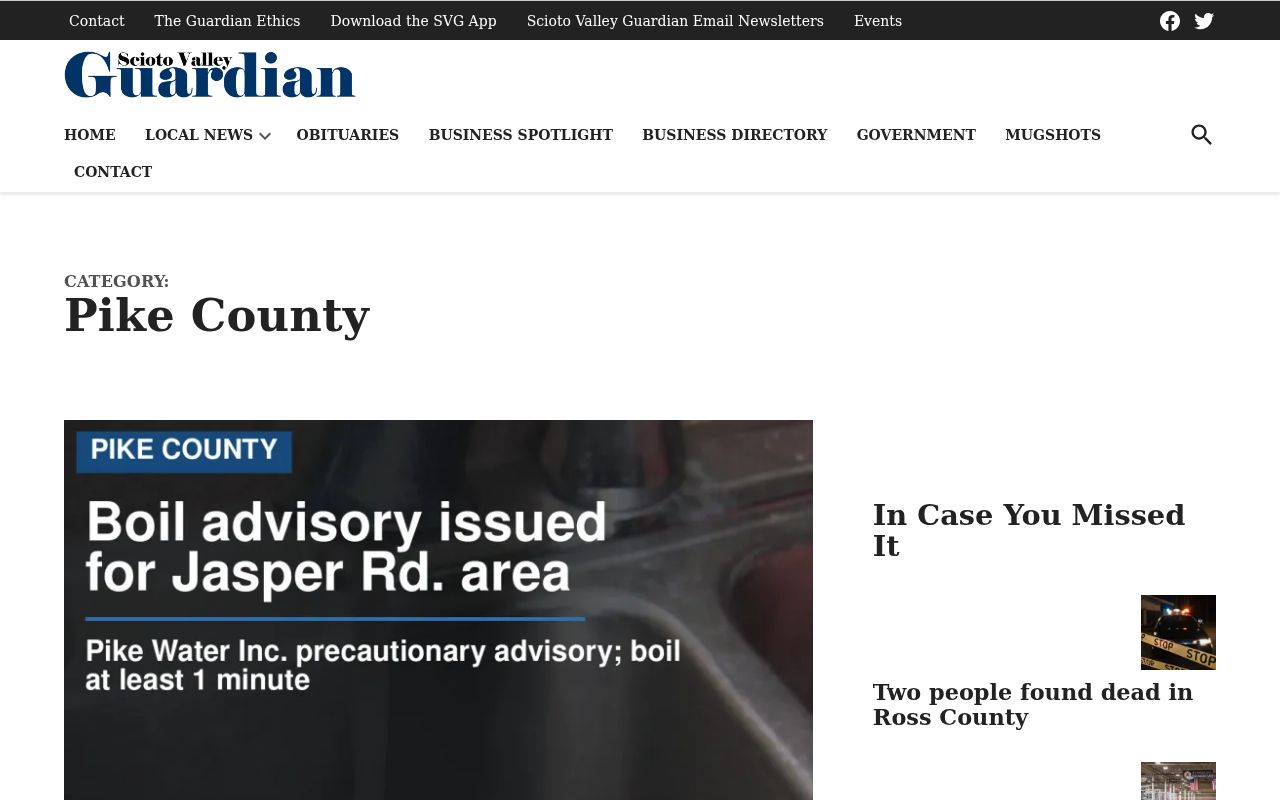
The archive page shows the range of coverage the outlet offers. It is not a full list of Pike County arrests.
Commercial booking sites pose a different problem. Some keep old entries, city labels, or copied booking photos long after the fact. That content can be stale, thin, or plain wrong. None of it settles whether a person is currently in custody or facing a current charge. The sheriff's office holds that answer, not a third-party site.
Pike Arrest Archives
Pike County's published pages never spell out how long arrest records are kept. That decision belongs to the records schedules the county adopted. A schedule determines whether a booking sheet, jail register, photo, or release entry still exists. It does so for every category of record. A missing web row proves nothing about the underlying record. It may sit in a file drawer.
Ask Sheriff Records directly, extension 3. Keep the request narrow. Give the full name and the date range. Include the arresting agency if you know it. Spell out the exact items you want. Booking date and time, jail ID, charges, bond, transfer destination, and release date are all fair game. Request the booking photograph only if it is retained and disclosable. Also ask which retention schedule applies, plus the legal authority behind anything withheld.
The Ohio Public Records Act lets an office ask you to narrow a vague or sprawling request. It cannot demand that you be nice about it. An office also has no duty to build a historical log it never kept. A proper denial cites its legal basis. Nonexempt material gets produced, sometimes with redactions. Note: Sealing or expungement is a court process, and a name vanishing from a live roster proves neither.
Court Closes the Record
Once a Pike County booking entry disappears, the court record takes over. The Pike County Clerk keeps the docket that follows a case forward. Arraignments show up there. So do amended charges, motions, and the final outcome. A docket can also surface someone who was summoned or released and never spent a night in jail. That person would appear on no roster anywhere.
Matching takes care. Names alone will trip you up. Pull the case number, the date, the charge, and the arresting agency whenever the record lists them. Timelines scatter across systems, too. The incident time, the Pike booking date, a regional book date, the news story, and the court filing can each land on a different day. Keep every label and every source date separate. That habit stops a jail transfer from looking like a second arrest. It also explains why a weekend arrest may not line up across jail and court files.
A photo field deserves the same caution. An image stored in a regional interface proves nothing about when it was taken or whether it is fit to republish. Corrections belong with the originating office. The final legal status lives on the docket. The Pike County recent-arrests overview shows how booking, custody, and court records connect.
Public Record Search
Sponsored Results